This year, Hydrologidagarna (HD) will be held at KTH in Stockholm on December 5 from 9:00 to 16:00.
Past HDs have explored specific water themes. Recognizing the breadth and interconnectedness of water issues, this year’s HD will feature a more open format. We encourage experts to contribute their knowledge on any water-related subject, from processes, modelling, ecology, energy, drinking water, food, recreation and beyond.
This year’s HD will feature oral presentations and poster sessions. The final schedule will be announced around November 22.
Coffee and lunch breaks are scheduled for in-depth discussion, meeting new and old colleagues, or taking a break. Therefore, the conference is an excellent opportunity to share information about ongoing projects, collaborations, and your organization’s structures and missions.
The event, including coffee and lunch, is free of charge to participants of member organizations. Non-members are kindly asked to contribute with a small fee of 500 SEK to cover the coffee and lunch (per person to be paid before the event).
If you want to participate, please sign up no later than November 17 2023, at 17:00 using this GoogleForm https://forms.gle/pDgLXWKA5456hGjr8 (In case the link doesn’t work directly, please copy+paste)
We hope to see you and many of your colleagues and look forward to inspiring talks and discussions.
Marcus Cheuk Hei Tong, a PostDoc at the Department of Forest Ecology and Management, SLU Umeå, was awarded a travel grant from SHR and attended Hydrologidagarna 2023. Below, Marcus shares a story describing his research about carbon, greenhouse gases, ditch cleaning and rewetted peatland.
When considering significant historical alterations to the regional hydrological systems caused by humans on a large scale, what has come to your mind? Are you thinking of canals or massive dams? In Sweden, up to 970 00 km of ditches (equivalent to 24 times around the world) have been created across the wetlands for agriculture and forestry (Lidberg et al, 2023). This has brought massive changes to the hydrology and possibly the global climate, but it has seldom been brought into the scene.
The regulation of land drainage in Sweden dates back to the Middle Ages, with laws governing the reduction of water surfaces and the drainage of wetlands. These practices have been deemed crucial for expanding cultivable land and, more recently, fostering forest growth. Peatlands, the most prevalent type of wetlands in Fennoscandia (Joosten and Clarke, 2002), play a vital role in long-term carbon sequestration due to a consistent positive balance between carbon input from vegetation biomass development and losses through organic matter decomposition (Clymo, 1984). The drainage of peatlands is likely to accelerate peat decomposition and the associated release of carbon (Laine et al., 1995). In recent years, discussions on hydrological management in forests have intensified, especially regarding the implications of these practices.
Over my previous PhD and my current postdoc projects, I have been exploring different hydrological managements of peatland forests on the carbon balance and greenhouse gas emissions. These include:
The carbon and greenhouse gas balance in a boreal drained peatland forest, with reference to a natural mire (manuscript under peer review process)
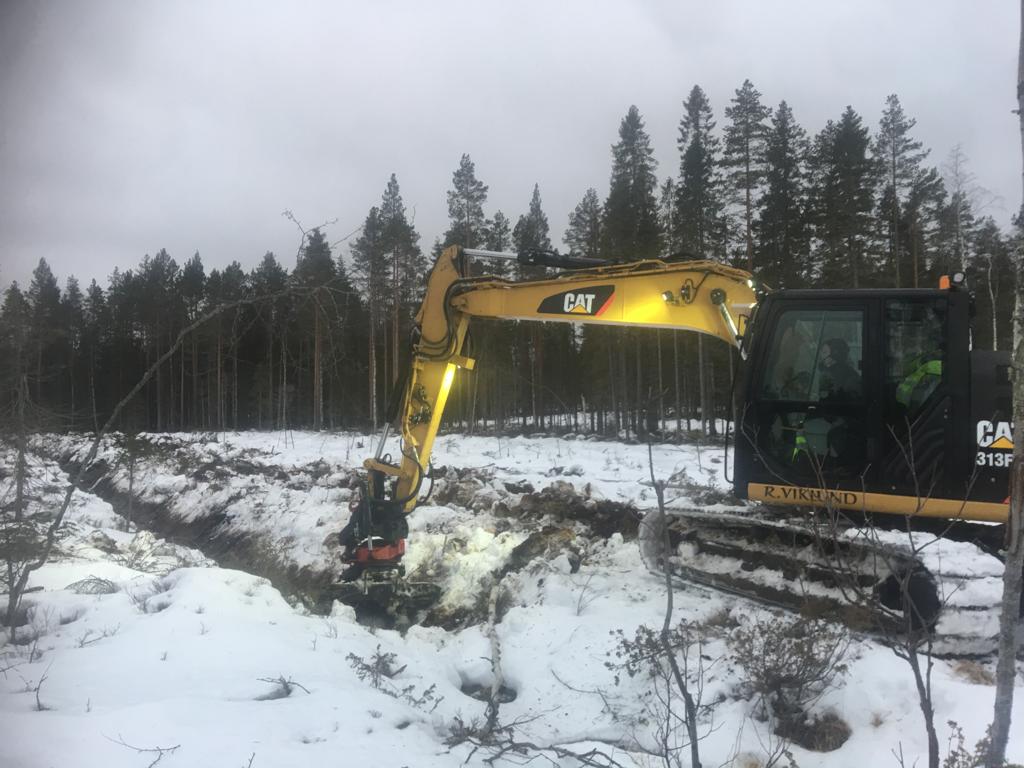
The carbon and greenhouse gas balance in response to post-harvest ditch cleaning (Tong et al., 2022a; Tong et al., 2022b)
The carbon and greenhouse gas balance in a recently rewetted boreal peatland, with reference to a natural mire (manuscript in progress)
Methodology
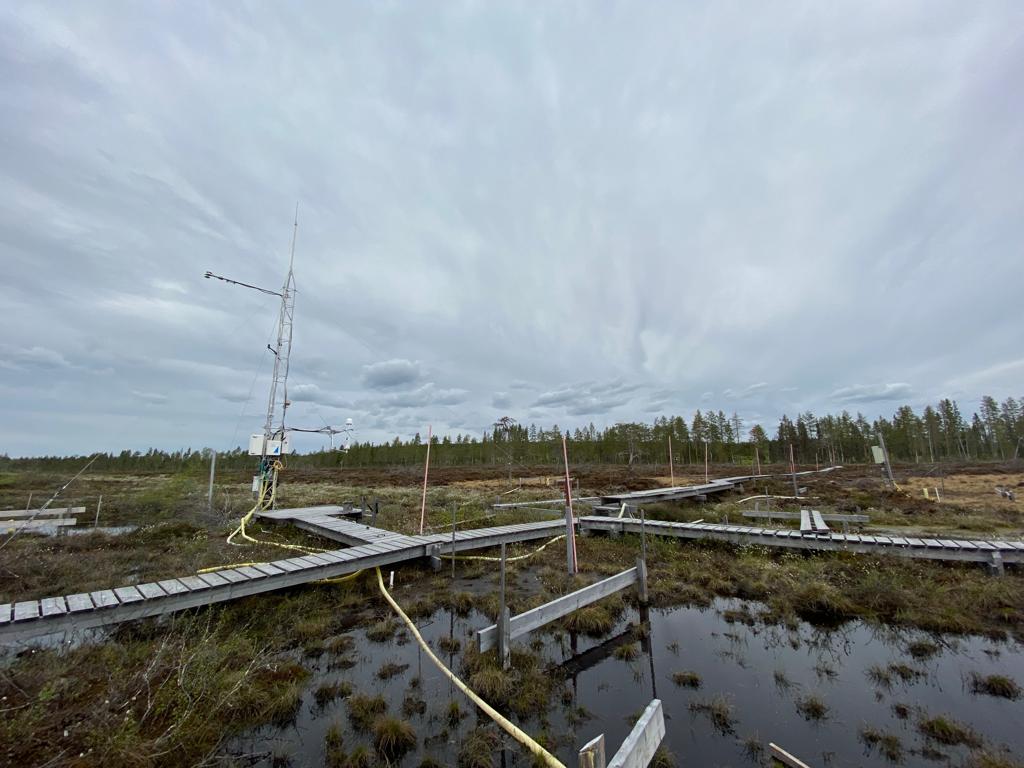
My projects have applied various approaches to quantify the carbon and greenhouse gas balance, including the application of eddy covariance when measuring with an ecosystem scale. Eddy covariance is a micrometeorological technique that enables real-time and continuous assessment of the exchange of gases, such as carbon dioxide (CO2) and methane (CH4), between ecosystems and the atmosphere. This approach relies on the precise measurement of fluctuations in wind velocity and gas concentrations to calculate fluxes at high temporal resolution.
In some occasions such as measurement of gas exchange from soil, manual closed chamber measurements have been applied. This is characterised by a sealed chamber being placed over the soil, with gas sampling ports connected to portable analysers to determine gas concentrations. The change in gas concentrations over time indicates the rate of gas fluxes.
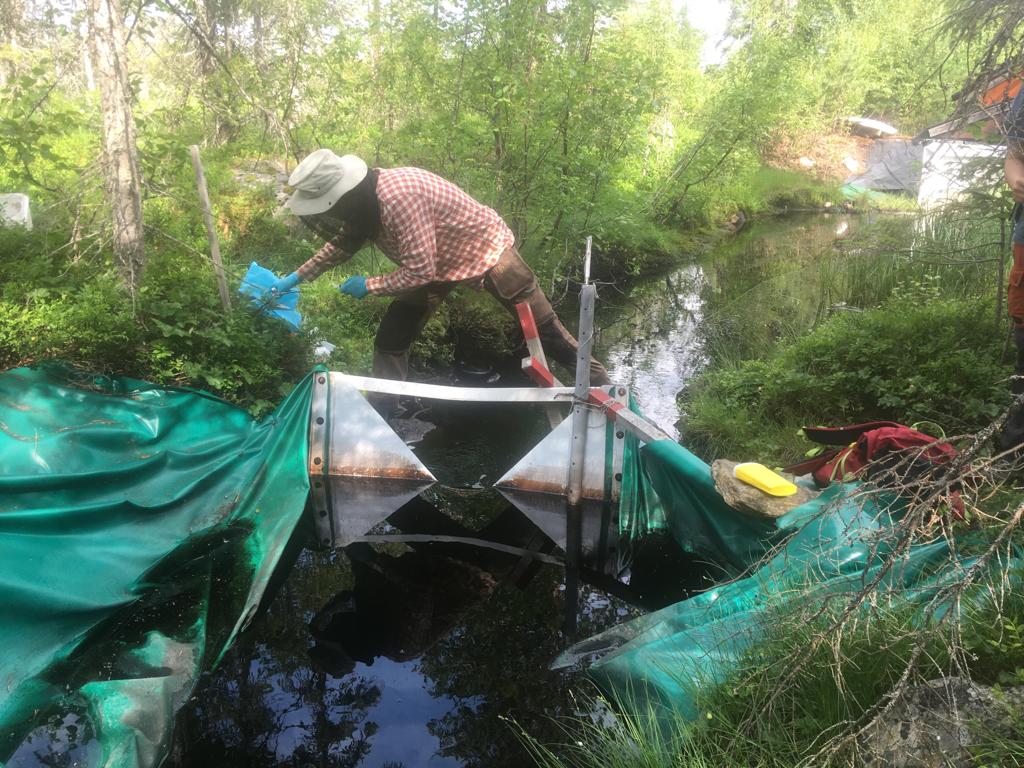
Water samples were also collected at the outlet of the study ecosystems to analyse the total amount of dissolved carbon, which includes both organic and inorganic carbon. After coupling with the discharge rate measured from V-notch weirs, the total rate of aquatic carbon discharge could be quantified.
Results
The study results indicate that hydrological drainage activities, including long term forestry drainage and short-term ditch cleaning on clearcuts, did not increase carbon and greenhouse gas emissions. Conversely, a rewetted peatland has recorded an emission of carbon during the initial two years, with reference to a nearby natural mire which was a contemporary carbon sink. CO2, the predominant gas in carbon and greenhouse gas balances, exhibited enhanced uptake in the historically drained peatland forest compared to the nearby natural mire. CO2 emissions decreased after the initial cleaning of ditches in a dry and fertile clear-cut. However, negligible alterations were noted following ditch cleaning in the relatively wet and infertile clear-cut. Moreover, the drainage had a consistent effect in mitigating the substantial emission of CH4 and potentially increasing CH4 absorption across all scenarios, whereas rewetting has increased CH4 emission during initial years but remained significantly lower than the natural mire.
Aquatic loss of carbon through dissolved carbon made a significant contribution (>20%) to the total carbon exchange in a natural mire. This indicates that aquatic exchange of carbon should not be neglected when accounting the total carbon balance from boreal peatlands.
It is also notable that beyond water levels, vegetation growth emerged as a crucial factor influencing carbon uptake and the climate-cooling impact at the study sites. This encompassed the development of ground vegetation in clear-cut areas and the growth of both overstory and understory vegetation in peatland forests. Overall, these findings highlight the intricate interplay between carbon dynamics, hydrological drainage effects, and vegetation growth in shaping the carbon balance and environmental cooling potential of peatland ecosystems.
References:
Clymo, R. S. (1984). The limits to peat bog growth. Philosophical Transactions of the Royal Society of London. B, Biological Sciences, 303(1117), 605-654.
Joosten, H., & Clarke, D. (2002). Wise use of mires and peatlands. International mire conservation group and international peat society, 304.
Laine, J., Vasander, H., & Laiho, R. (1995). Long-term effects of water level drawdown on the vegetation of drained pine mires in southern Finland. Journal of Applied Ecology, 785-802.
Lidberg, W., Paul, S. S., Westphal, F., Richter, K. F., Lavesson, N., Melniks, R., … & Ågren, A. M. (2023). Mapping drainage ditches in forested landscapes using deep learning and aerial laser scanning. Journal of irrigation and drainage engineering, 149(3), 04022051.
Tong, C. H. M., Nilsson, M. B., Drott, A., & Peichl, M. (2022a). Drainage ditch cleaning has no impact on the carbon and greenhouse gas balances in a recent Forest clear-cut in boreal Sweden. Forests, 13(6), 842.
Tong, C. H. M., Nilsson, M. B., Sikström, U., Ring, E., Drott, A., Eklöf, K., … & Peichl, M. (2022b). Initial effects of post-harvest ditch cleaning on greenhouse gas fluxes in a hemiboreal peatland forest. Geoderma, 426, 116055.